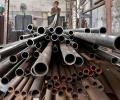
The imposition of safeguard duty, an uptick in exports, and an increase in input cost are driving steel prices higher. The latest round of price increase took place on Friday, with some steel mills increasing hot-rolled coil (HRC) prices by ~500-750 a tonne, according to price reporting and market intelligence firm BigMint. HRC is a benchmark for flat steel.

Supported by strong buoyancy in public sector capital expenditure (capex), growth in infrastructure investment is expected to accelerate in 2025-26 (FY26) compared to 2024-25 (FY25), according to the First Advance Estimates of gross domestic product (GDP) for FY26 released by the National Statistics Office (NSO) on Wednesday.

Retail inflation rose to a three-month high of 1.33 per cent in December 2025 mainly due to higher prices of kitchen essentials, including vegetables and protein-rich items.
'Sebi's move to cap brokerage charges will help investors by lowering the overall cost of investments.'

Top real estate developers reported healthy presales growth in the second quarter of FY26, aided by a steady pipeline of new project launches. While overall housing momentum across major Indian cities moderated during the quarter, listed players remained relatively insulated.
The Indian steel industry is faced with a paradox: Rising demand and falling prices. Demand continues to surge as user industries gather pace, with the World Steel Association projecting around 9 per cent annual growth for India over 2025 and 2026, the year domestic demand is projected to be almost 75 million tonnes (mt) higher than in 2020.

India's top cement producers delivered a solid July-September quarter (Q2) in 2025-26 (FY26), lifted by firmer prices, higher sales volumes, and a favourable base. Seasonal weakness and maintenance outages did dent sequential performance, but the overall picture remained positive - and the road ahead looks steady.

The imposition of a 100 per cent tariff by the US on imports of branded and patented pharmaceutical products starting October 1 may not significantly hurt Indian drug makers, with Sun Pharma being exposed to some headline risk but with limited earnings impact, according to analysts. Among Indian companies, only Sun Pharma has sizeable sales from patented drugs in the US (about 17 per cent of 2024-25 revenue), HSBC Global Investment Research said in a report.

On the profitability front, Crisil foresees a 0.5 per cent basis points y-o-y jump in EBITDA (operating profit) margins in Q2 FY15.

India's top listed real estate developers - DLF, Lodha Group, Prestige Estates, and Oberoi Realty, excluding Godrej Properties - reported strong presales growth in the first quarter (Q1) of 2025-26 (FY26), even as earnings showed a mixed trend. According to Nomura, the top five developers - DLF, Lodha, Prestige, Oberoi, and Godrej - recorded a cumulative 59 per cent year-on-year (Y-o-Y) growth in presales.

The report mentioned that the government spends 2.2 per cent of the GDP on pension bill.

The Crisil study covered 600 companies excluding financial services and oil companies, representing 71 per cent of the overall market capitalisation of India Inc.

The Indian IT services sector is staring at a second consecutive year of muted revenue growth due to modest increase in tech spends in Europe and the US, a domestic rating agency said on Wednesday. Crisil Ratings said it expects the sector to grow at 5-7 per cent in FY25, after a growth of 6 per cent estimated to have been achieved in FY24. The overall industry size is pegged at $250 billion and it creates over 50 lakh direct jobs.

Rising commodity prices are set to hurt margins of India Inc in the on-going fourth quarter of FY 11, even though revenues are seen higher than the previous year, ratings agency Crisil said on Monday.

While demand for sub Rs 50-lakh affordable housing prevails, market players cite increased land rates, escalated construction costs and low margins as key prohibiting factors.

According to the report, export-oriented sectors like IT services, pharmaceuticals and textiles will, in aggregate, report EBITDA margin expansion of nearly 100 bps, while margin is likely to decline by about 50 bps for other sectors during this period.

Revenues from Bangladeshi patients have declined by 30% to 35% in 2024-2025. Bangladesh typically accounts for 70% to 75% of all medical visas issued by India.

Only a limited set of investors should invest directly in corporate bonds.

'Balancing tunnel developments with ecological realities is a major challenge and, when overlooked, can contribute to mishaps.'

In 2025 banks are in for challenges such as pressure on margins and slowing credit growth. With the likelihood of a repo rate cut in February or April, external benchmark-linked loans of banks will be repriced immediately. However, deposit rates are expected to adjust more gradually, which could impact the net interest margin (NIM) - a key measure of profitability for banks.

Crisil said a complete phase out of CST is necessary.

The "weaponisation" of economic activity - through tariffs and sanctions - is now a reality, with countries leveraging these tools strategically, External Affairs Minister S Jaishankar said at the Raisina Dialogue recently.
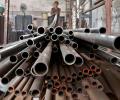
Domestic steel prices have seen an increase over the past couple of months in anticipation of a safeguard duty, but a looming global trade war is likely to weigh as threat of import rises and prospect of export flounders. Data from BigMint showed that in March 2025, hot rolled coil (HRC) prices ex-Mumbai increased by Rs 600 per tonne month-on-month (M-o-M), rising from Rs 48,400 per tonne in February to Rs 49,000 per tonne.

The revenue growth of Indian companies for the July-September quarter is estimated to be 5-7 per cent year-on-year (Y-o-Y), marking the slowest growth in 16 quarters, rating agency CRISIL said on Thursday.

ating agency Crisil on Wednesday said it has signed an agreement to buy the business of US-based Knowledge Process Outsourcing Industry Pipal Research Corporation for $12.75 million.

Bajaj Auto, India's leading two-wheeler (2W) and three-wheeler (3W) maker, is scaling up its wholly owned finance subsidiary, Bajaj Auto Credit Ltd (BACL), with an investment of more than Rs 3,000 crore planned over the next two financial years, company's managing director Rajiv Bajaj said. BACL has already started commercial operations, Bajaj recently said on the sidelines of the group's CSR identity event. According to rating agency CRISIL, BACL's operations began on January 1 after receiving its licence from the Reserve Bank of India (RBI) in August last year.

Dr Nagesh Kumar, one of the three new MPC members, wanted the MPC to reduce the repo rate by 25 basis points to 6.25%.

When the world was upended by the Covid-19 pandemic, metals got its shine back. In the last two years, infrastructure spending by major economies spurred demand, energy transition and intermittent supply disruptions fuelled a scorching rally in metals after a downturn during the first Covid wave. Now, Russia's war on Ukraine is ensuring that elevated prices stay the course.
Revenues of Indian companies, excluding those engaged in banking and oil, are expected to grow marginally at 5-6 per cent in the first quarter of this fiscal.

'The Budget needs to focus more on social welfare schemes.'

IIM-A announced a tie-up with three corporate houses -- CRISIL, ATS Infra and SAP -- for research in financial markets, infrastructure and entrepreneurship.
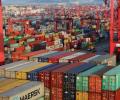
Concerned over the fallout of the Red Sea crisis and severe shortage of containers against the backdrop of a steep decline in merchandise exports in August, the Union government is pulling out all the stops to find a solution. To begin with, the government has devised a strategy aimed at boosting container supply and supporting exporters.

India always faces a Hobson's choice as far as feeding coal-fired generators goes - even if the government is reluctant to admit it. The country cannot do without shipping in the world's most polluting fuel from overseas. And it will continue to do so unless it decides to reduce demand by forcing citizens, farmers and businesses to live without electricity for part of the day, or use diesel generators to fire facilities.
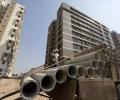
Home sales in the top 10 cities - Ahmedabad, Bengaluru, Chandigarh, Chennai, Hyderabad, Kochi, Kolkata, Mumbai Metropolitan Region (MMR), National Capital Region (NCR) and Pune - have declined at a compound annual growth rate of 8% since 2011.

The government on Tuesday proposed reducing the long-term capital gains tax on immovable properties to 12.5 per cent from 20 per cent, but removed the indexation benefits to adjust for inflation, a move experts termed as "negative" for sellers.

RJio will further add bottomline pressures on the already struggling telcos that will ultimately be forced to consolidate
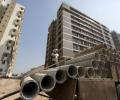
During 2023, the Indian real estate sector - both housing and commercial - witnessed buoyancy fuelled by demand, supply, and absorption, and the sector is banking on the upcoming Budget to keep the momentum going. Mumbai-based Sattva Group wants the government to focus on the critical pillars for long-term growth. The company emphasised on the infrastructure boom with increased allocation, lower goods and services tax (GST) rates, incentives for affordable housing and single-window clearance to fast-track projects and support liquidity.

Closely watched by the world for any escalation, the Iran-Israel conflict is already showing early signs of stress for India Inc - longer deliveries, doubling freight rates, extended working capital cycles, and higher costs. For those yet to feel the heat, there is growing apprehension and nervousness over future developments, observed industry executives.
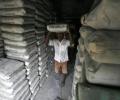
The March quarter (Q4) of the ongoing financial year (FY23) may see cement companies report better financial numbers as input costs ease, pricing action resumes, and cement demand remains firm. While companies have been cautiously optimistic about their outlook, analysts and sector experts remain bullish. In its latest report on the cement sector, brokerage IDBI Capital said that it expected earnings before interest, tax, depreciation, and amortisation (Ebitda) per tonne for cement companies to improve by Rs 200-300 sequentially in Q4.

Size matters on the road. Small is not dominating India's car market any more. The share of cars priced up to Rs 5 lakh in the passenger vehicle market has fallen to 10.5 per cent in the first 11 months of 2021-22, compared with 26 per cent in 2018-19 (FY19), the lowest in four years, according to data from industry sources. Even the share of those in the price range between Rs 5 lakh and Rs 7.5 lakh has dropped to 32.4 per cent in the same period, from 34.9 per cent.
 © 2026 Rediff.com - Advertise with us - Disclaimer - Privacy Policy - Sitemap - Feedback - About us - Terms of use - Grievances